
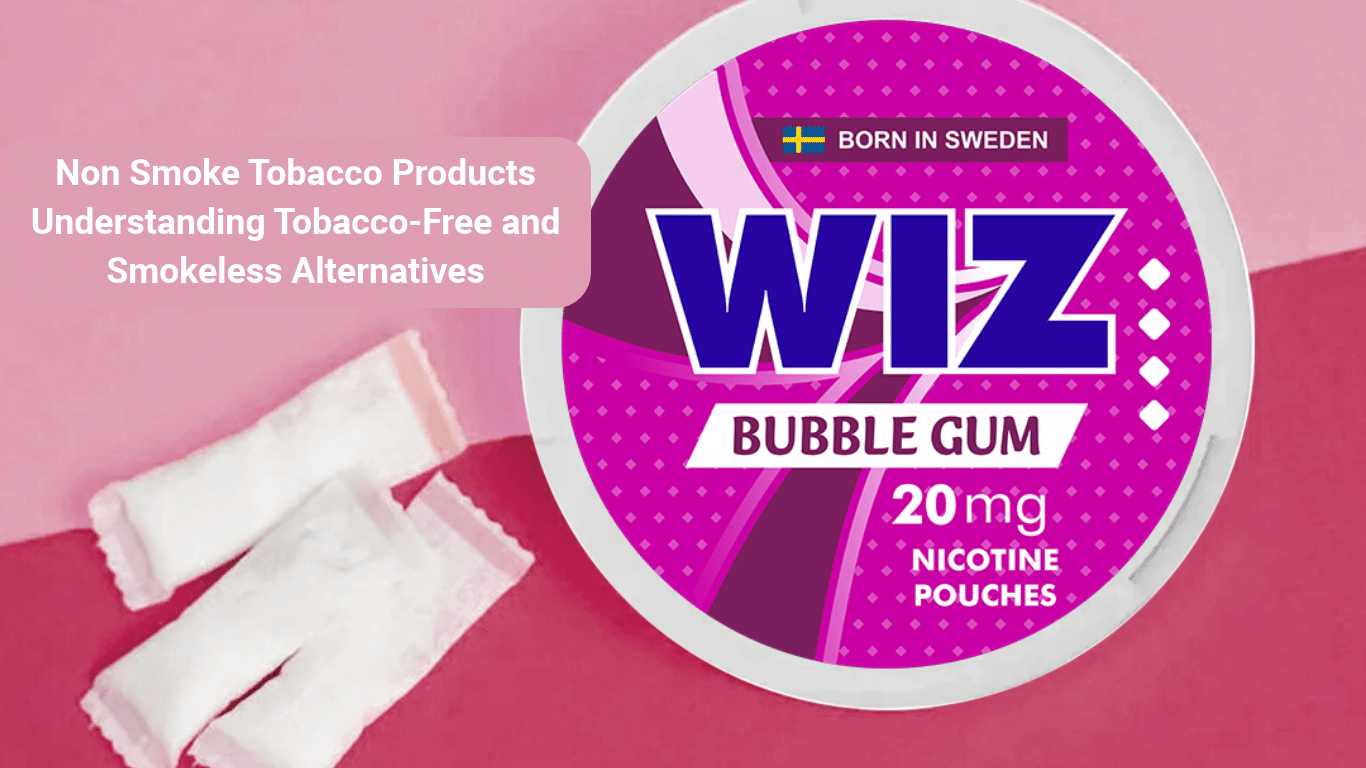
As awareness of the health risks associated with smoking grows, people are increasingly exploring products described as smokeless, tobacco-free, or smoke-free alternatives. However, these terms do not all mean the same thing. Understanding the differences is important for anyone researching non smoke tobacco products, including nicotine pouches and other smokeless options.
Wiz Pouches operates in the nicotine pouch category, making it important to understand how these products differ from traditional tobacco products and what consumers should know about their ingredients, potential risks, and responsible use.
This guide explains the meaning of non-smoke tobacco products, the differences between tobacco-free and smokeless alternatives, and the key factors to consider when evaluating these products.
What Are Non-Smoke Tobacco Products?
The phrase non-smoke tobacco is commonly used to describe products that do not involve burning tobacco and inhaling the resulting smoke. It is an informal search term rather than a precise scientific or regulatory category.
Products associated with this term can include traditional smokeless tobacco products, tobacco-free nicotine pouches, and other oral products that do not require combustion.
These categories are different, so it is important to examine each product’s ingredients and method of use rather than relying only on labels such as “smoke-free” or “tobacco-free.”
For example, a smokeless tobacco product may still contain tobacco leaf, while a tobacco-free nicotine pouch generally contains nicotine, plant-based or other fillers, flavourings, and additional ingredients without tobacco leaf. The exact formulation varies by product.
An important distinction: A product that does not produce smoke is not necessarily tobacco-free, nicotine-free, or harmless.
Types of Non-Smoke and Smokeless Products
Several product categories are commonly discussed when people research non-smoke tobacco alternatives. Their ingredients, effects, and risks can differ significantly.
1. Traditional Smokeless Tobacco
Traditional smokeless tobacco products contain tobacco and are used without burning the tobacco. Depending on the product and region, they may be chewed, placed in the mouth, or used in other ways.
Examples include chewing tobacco and certain oral tobacco preparations.
Although these products do not involve smoking, they can expose users to nicotine and harmful chemicals. Some smokeless tobacco products are associated with serious health risks, including oral health problems and certain cancers.
The absence of smoke does not eliminate the risks associated with tobacco.
2. Tobacco-Free Nicotine Pouches
Tobacco-free nicotine pouches are small oral pouches placed between the upper lip and gum. They generally do not contain tobacco leaf, although they contain nicotine and other ingredients.
Depending on the formulation, ingredients may include plant-based fibres, nicotine, flavourings, sweeteners, pH adjusters, and moisture-related components.
Wiz Pouches is a brand in this product category. People researching Wiz Pouches should review the information provided for each specific product, including its nicotine content, ingredients, warnings, and directions for use.
The term tobacco-free describes the absence of tobacco leaf in a product; it does not mean that the product is nicotine-free or risk-free. Nicotine is addictive and can have adverse effects.
3. Nicotine-Free Oral Pouches
Some oral pouches are marketed without nicotine. Depending on their formulation, they may contain flavourings and other ingredients intended to provide an oral sensory experience.
These products should not be confused with nicotine pouches. Consumers should check the packaging and ingredient list rather than assuming that every pouch product contains the same substances.
A nicotine-free label also does not automatically establish that a product is harmless. Ingredients, intended use, and applicable safety information still matter.
4. Other Smoke-Free Nicotine Products
Other products deliver nicotine without burning tobacco. Their form, method of use, and regulatory status vary.
They should not all be grouped together because their ingredients, exposure pathways, and health effects may differ. Products intended for smoking cessation also have different purposes and evidence requirements from consumer nicotine products.
Anyone seeking help to quit smoking should consider evidence-based cessation support and consult a qualified healthcare professional rather than assuming that all smoke-free products are suitable cessation aids.
Tobacco-Free vs. Smokeless Tobacco: What Is the Difference?
The terms tobacco-free and smokeless tobacco are often used interchangeably in everyday conversation, but they describe different characteristics.
| Feature | Traditional smokeless tobacco | Tobacco-free nicotine pouches |
|---|---|---|
| Tobacco leaf | Usually present | Generally absent |
| Nicotine | Often present | Usually present, depending on the product |
| Burning required | No | No |
| Smoke produced during intended use | No | No |
| Addiction risk | Yes, when nicotine is present | Yes, when nicotine is present |
| Risk-free | No | No |
This comparison is general. Product formulations vary, and the label alone cannot establish a product’s overall safety.
The main distinction is whether the product contains tobacco leaf, not whether it contains nicotine. Both categories can present health risks.
Why Do People Research Non Smoke Tobacco Products?
People search for non-smoke tobacco products for different reasons. Some want to understand the differences between smoking and oral products, while others are researching product ingredients, flavours, formats, or nicotine content.
Common areas of interest include:
- Product composition: Whether a product contains tobacco leaf, nicotine, or other ingredients.
- Method of use: Whether the product is designed for oral use rather than smoking.
- Nicotine strength: How much nicotine is listed per pouch or serving.
- Flavour and format: Which options are available and how products differ.
- Safety information: Potential side effects, warnings, storage requirements, and age restrictions.
- Regulatory compliance: Whether a product can legally be sold or used in the relevant location.
These factors can help readers understand the category, but convenience, flavour, or the absence of smoke should not be treated as evidence of safety.
Understanding Nicotine Content and Potential Risks
Nicotine is an addictive substance. Nicotine-containing pouches can lead to dependence and may cause unwanted effects, including nausea, dizziness, headaches, increased heart rate, or irritation of the mouth and gums.
The likelihood and severity of effects can vary according to nicotine concentration, frequency of use, individual sensitivity, and other factors.
Nicotine products are particularly unsuitable for young people and people who are pregnant. People with underlying health concerns should seek advice from a healthcare professional before using nicotine products.
Nicotine pouches should also be kept securely away from children and pets. Accidental ingestion can cause nicotine poisoning and may require urgent medical attention.
It is important to remember that smoke-free does not mean risk-free. Tobacco-free nicotine pouches are not harmless consumer products, and they should not be assumed to be safe alternatives for people who do not already use nicotine.
What Should Consumers Check Before Evaluating a Product?
When researching products in the non-smoke category, consumers should focus on verifiable product information rather than promotional descriptions alone.
Review the ingredient list
Check whether the product contains tobacco leaf, nicotine, flavourings, sweeteners, or other ingredients. Do not assume that two products have the same formulation simply because they belong to the same category.
Check the stated nicotine strength
Read the nicotine amount and understand whether the figure refers to an individual pouch or another measurement. Do not compare products using figures that are expressed on different bases.
Higher nicotine concentrations may increase the risk of adverse effects and dependence. Following a label does not make nicotine use risk-free.
Read the warnings and directions
Review the manufacturer’s instructions, age restrictions, storage guidance, and safety warnings. Products should only be used in accordance with their stated directions and applicable law.
Consider product quality and traceability
Look for clear manufacturer information, identifiable packaging, batch details where provided, and accessible customer or safety information. Avoid products with unclear ingredients, misleading labels, or unsupported health claims.
Check local regulations
Rules governing nicotine pouches and other tobacco-related products vary between countries and can change. Before purchasing, distributing, or using a product, check the current requirements in the relevant location.
How Wiz Pouches Fits Into the Nicotine Pouch Category
Wiz Pouches is associated with tobacco-free nicotine pouches. As consumers research this category, it is useful to understand the product format and distinguish it from traditional smokeless tobacco.
People exploring Wiz Pouches should review the information available for the specific product they are considering. Details such as nicotine strength, ingredients, warnings, and directions should be confirmed from the product packaging and official product information.
Flavour names and product descriptions can help identify individual variants, but they should not replace a review of the ingredients and safety information.
Wiz Pouches should not be described as risk-free simply because its products are tobacco-free or do not produce smoke. Nicotine dependence and other potential adverse effects remain important considerations.
Anyone who does not currently use nicotine should not start using nicotine pouches. People who want to stop smoking or using tobacco should seek evidence-based cessation support from a qualified healthcare professional.
Frequently Asked Questions
What does non smoke tobacco mean?
“Non smoke tobacco” is an informal phrase used to describe products that do not require tobacco combustion and smoke inhalation. It can refer to traditional smokeless tobacco or be used more broadly when people research tobacco-free nicotine pouches. The ingredients differ by product.
Are tobacco-free nicotine pouches the same as smokeless tobacco?
No. Traditional smokeless tobacco products generally contain tobacco leaf, while tobacco-free nicotine pouches generally do not. However, tobacco-free nicotine pouches can still contain addictive nicotine and carry health risks.
Do non-smoke products contain nicotine?
Some do and some do not. Traditional smokeless tobacco products commonly contain nicotine, and tobacco-free nicotine pouches usually contain it as well. Always check the specific product’s ingredient list and label.
Are tobacco-free nicotine pouches harmless?
No. Tobacco-free does not mean nicotine-free or harmless. Nicotine is addictive and can cause adverse effects. The risks depend on the product and the person using it.
What should people know about Wiz Pouches?
Wiz Pouches belongs to the nicotine pouch category. Anyone researching its products should check the official product information for ingredients, nicotine content, directions, and warnings. The absence of tobacco leaf does not eliminate the risks associated with nicotine.
Conclusion
Understanding non-smoke tobacco products requires looking beyond the terminology used on packaging and in online searches. Traditional smokeless tobacco, tobacco-free nicotine pouches, and nicotine-free oral products are distinct categories with different ingredients and potential risks.
For people researching non smoke tobacco, the most useful approach is to verify product composition, understand nicotine-related risks, read safety information, and check local regulations before making decisions.
Wiz Pouches sits within the tobacco-free nicotine pouch category. Clear, accurate product information can help readers understand what this category involves, but tobacco-free and smoke-free descriptions should never be interpreted as guarantees of safety. For those who do not use nicotine, avoiding initiation is the safest choice; for those seeking to quit smoking, evidence-based cessation support remains an important option.

